Devotees across India turn to the Maa Baglamukhi Puja Vidhi when they seek strength, protection, and victory over obstacles in life. This ancient Vedic ritual is dedicated to Maa Baglamukhi, one of the ten Mahavidyas, known for her power to silence negativity and grant courage to her devotees.
If you are planning to perform this puja for the first time, understanding the correct Baglamukhi Puja Vidhi is essential. In this guide, we walk you through every step, from preparation to the final aarti, along with the samagri list, mantra guidance, and answers to the most common questions devotees ask.
Who is Maa Baglamukhi? A Quick Background
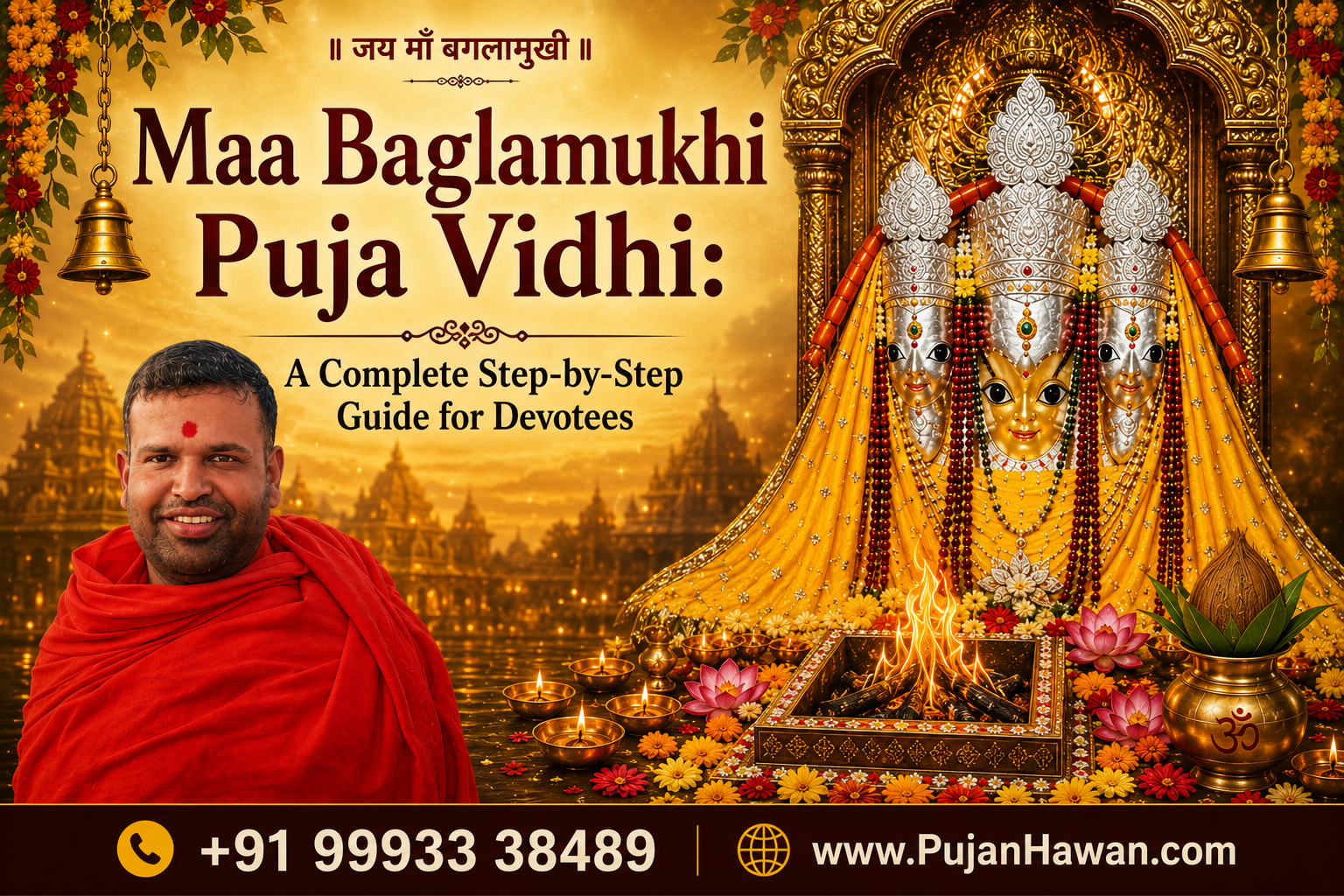
Maa Baglamukhi is worshipped as the goddess of power, control, and protection. She is often depicted in yellow attire, holding a mace and pulling the tongue of a demon, symbolizing her ability to stop enemies, negativity, and false speech.
Devotees perform the Maa Baglamukhi Puja to overcome legal troubles, court cases, professional rivalry, and hidden enemies. Many also perform this puja for mental clarity, protection from black magic, and success in competitive situations.
One of the most significant places associated with this goddess is the Baglamukhi Shaktipeeth located in Nalkheda, Madhya Pradesh. This temple is considered one of the most powerful centers for Baglamukhi Puja Nalkheda, drawing devotees from across the country.
Preparing for Maa Baglamukhi Puja Vidhi
Before starting the ritual, preparation plays a vital role in the success of the puja. Traditional Vedic Baglamukhi Puja practices recommend the following preparatory steps.
-
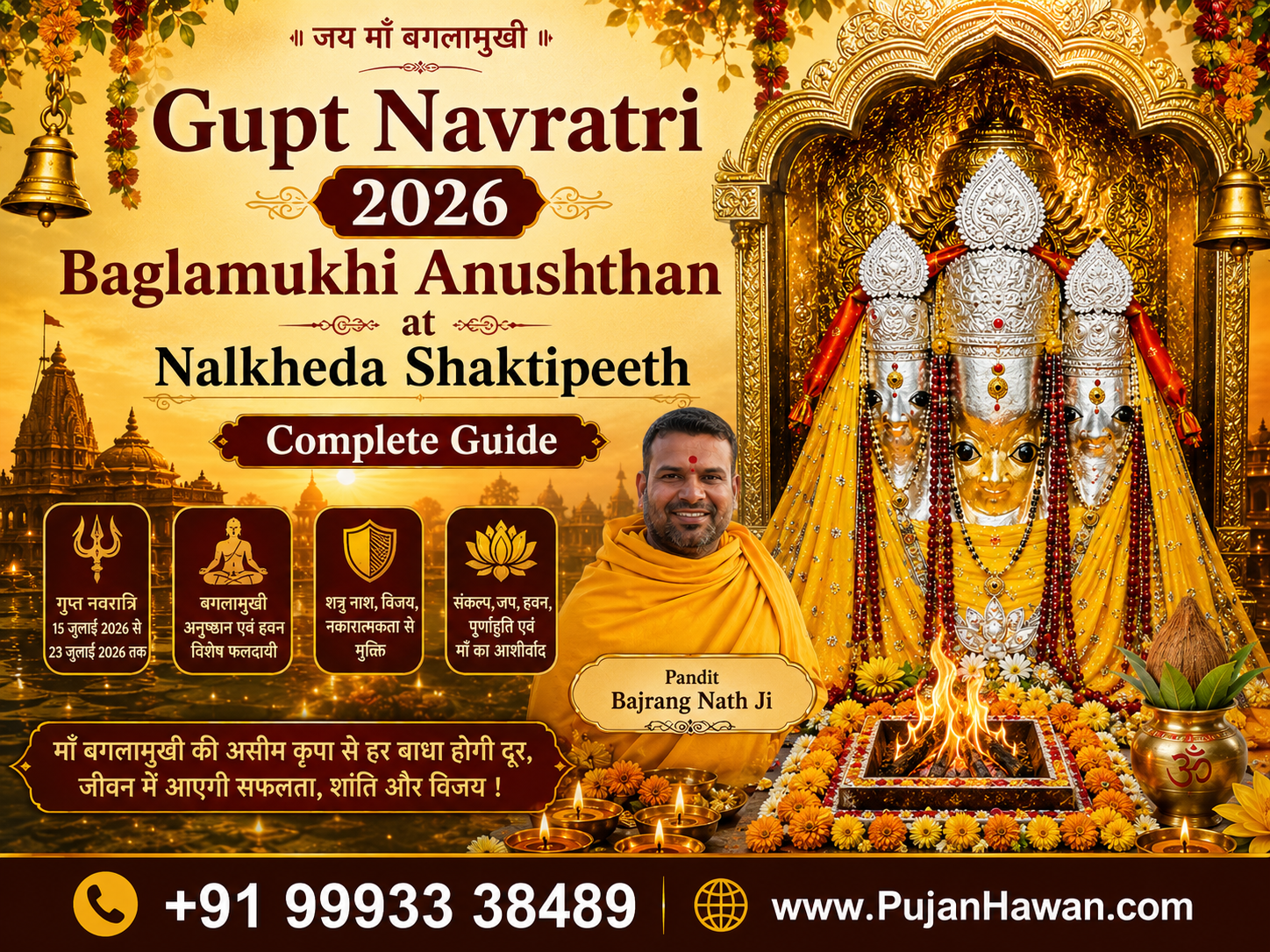
Choose an auspicious day, ideally a Tuesday, Thursday, or during Gupt Navratri
-
Take a bath early in the morning and wear clean, preferably yellow clothing
-
Clean the puja area and set up a small platform facing north or east
-
Keep all samagri items ready before beginning the ritual
-
Maintain a calm and focused mind throughout the process
Many devotees also consult a qualified pandit before the puja to determine the exact date and time, known as the muhurat, based on their personal horoscope and purpose of worship.
Baglamukhi Puja Samagri: Items Required for the Ritual
A proper Baglamukhi Puja Samagri list ensures the ritual is performed according to tradition. Below are the commonly required items for this puja.
-
Yellow flowers, especially marigold
-
Turmeric powder and turmeric garland
-
Yellow cloth for the deity and offerings
-
Kumkum, sandalwood paste, and akshat (rice grains)
-
Ghee lamp, cotton wicks, and incense sticks
-
Coconut, fruits, and yellow sweets like besan laddoo
-
Betel leaves, betel nuts, and sacred water (Gangajal)
-
A picture or idol of Maa Baglamukhi
If the puja includes a havan, additional samagri such as havan kund, mango wood, and specific herbs are required. A pandit can guide you on the exact quantity needed based on the scale of the ceremony.
Maa Baglamukhi Puja Vidhi: Step-by-Step Process
The heart of this guide lies in the actual Maa Baglamukhi Puja Vidhi. Below is the traditional sequence followed by most devotees and temple priests.
Step 1: Sankalp (Sacred Vow)
The puja begins with a sankalp, where the devotee states their name, gotra, and the purpose of the puja while holding water, rice, and flowers in their right hand. This step sets the intention for the entire ritual.
Step 2: Ganesh Puja and Kalash Sthapna
Before invoking Maa Baglamukhi, a brief prayer to Lord Ganesha is performed to remove obstacles. A kalash, filled with water and topped with mango leaves and a coconut, is placed as a symbol of divine presence.
Step 3: Invocation of Maa Baglamukhi
The deity is invoked through mantra chanting, inviting her presence into the idol or picture placed on the altar. This is one of the most significant moments of the Baglamukhi Puja Vidhi.
Step 4: Offering of Samagri
Yellow flowers, turmeric, sandalwood paste, and other items from the samagri list are offered one by one, accompanied by specific mantras for each offering. This step reflects the devotee's reverence and devotion.
Step 5: Chanting the Baglamukhi Mantra
The Baglamukhi Mantra is chanted a specific number of times, often in multiples of 108, using a rosary made of haldi (turmeric) beads. The number of repetitions and exact mantra are usually decided by the officiating pandit based on the purpose of the puja.
Step 6: Havan (Optional)
For more elaborate ceremonies, a havan is performed where offerings are made into a sacred fire while chanting mantras. This step is considered highly powerful and is often included in longer anushthans.
Step 7: Aarti and Prasad Distribution
The puja concludes with an aarti, where a lit lamp is offered to the deity while singing devotional songs. Prasad, usually yellow sweets, is then distributed among family members and devotees present.
Step 8: Final Prayers and Gratitude
The ritual ends with a prayer expressing gratitude to Maa Baglamukhi and seeking her continued blessings and protection. Devotees often bow before the deity one final time before concluding the ceremony.
Baglamukhi Puja Benefits for Devotees
Devotees who perform this puja with sincere devotion often report a sense of inner strength and clarity. Some of the widely believed Baglamukhi Puja Benefits include the following.
-
Protection from hidden enemies and negative energies
-
Support in legal matters and court cases
-
Improved focus, confidence, and decision-making ability
-
Relief from professional rivalry and workplace obstacles
-
Mental peace and reduction in fear or anxiety
It is important to note that individual experiences may vary, and the puja should be performed with faith rather than as a guaranteed solution to any specific problem.
Maa Baglamukhi Temple Nalkheda: The Sacred Shaktipeeth
The Maa Baglamukhi Temple Nalkheda holds a special place among the Shaktipeeths of India. Located on the banks of the Lakhundar river in Madhya Pradesh, this temple is considered one of the most powerful centers for worshipping the goddess.
According to the Archaeological Survey of India, many ancient temples across Madhya Pradesh, including Shaktipeeths, hold deep historical and cultural significance rooted in centuries of tradition.
Devotees travel from across the country to perform Baglamukhi Puja Nalkheda at this temple, especially during Navratri. Many also choose to perform elaborate anushthans here under the guidance of experienced local priests who specialize in Maa Pitambara Puja and related rituals.
For those unable to travel, several temple trusts and Vedic service providers now offer remote booking options, allowing devotees to participate in the puja through a personalized sankalp performed on their behalf.
Vedic Baglamukhi Puja: Why Tradition Matters
Following the correct Vedic Baglamukhi Puja method is considered important by scholars of Hindu ritual practice. According to general principles outlined by cultural and religious research institutions, Vedic rituals rely on precise mantra pronunciation, correct timing, and disciplined procedure to maintain their intended spiritual effect .
This is why many devotees prefer to have the puja conducted by an experienced pandit rather than attempting it entirely on their own, especially for first-time worshippers or complex anushthans.
Common Mistakes to Avoid During Baglamukhi Puja
Even with good intentions, small errors can affect the outcome of the ritual. Here are a few common mistakes devotees should avoid.
-
Skipping the sankalp or rushing through the invocation
-
Using items that are not fresh, especially flowers and fruits
-
Chanting the mantra without proper guidance on pronunciation
-
Performing the puja without a clear and calm state of mind
-
Ignoring the recommended day and time for worship
Taking guidance from a knowledgeable pandit can help devotees avoid these errors and ensure the ritual is performed with full sincerity and accuracy.
Maa Baglamukhi Puja Vidhi at a Glance
For devotees who want a fast reference, here is a short recap of the entire process.
-
Prepare samagri and choose an auspicious day
-
Perform sankalp and Ganesh puja
-
Invoke Maa Baglamukhi and offer samagri
-
Chant the Baglamukhi mantra with devotion
-
Perform havan if included in the ceremony
-
Conclude with aarti, prasad, and gratitude prayers
Frequently Asked Questions (FAQs)
1. What is the correct Maa Baglamukhi Puja Vidhi?
The traditional Maa Baglamukhi Puja Vidhi begins with purification, taking a sankalp, invoking Maa Baglamukhi, offering yellow flowers, turmeric, fruits, and sweets, chanting Baglamukhi mantras, performing aarti, and concluding with prayers for blessings. The exact procedure may vary depending on temple traditions and the guidance of a qualified Vedic pandit.
2. What items are required for Maa Baglamukhi Puja?
Common puja items include yellow flowers, turmeric, kumkum, sandalwood paste, incense sticks, ghee lamp, coconut, fruits, yellow sweets, betel leaves, sacred water, and a yellow cloth. Additional samagri may be required if a havan or anushthan is performed.
3. Which mantra is chanted during Maa Baglamukhi Puja?
The puja includes traditional Baglamukhi mantras dedicated to the goddess. The specific mantra and the number of repetitions are generally decided by the officiating pandit according to Vedic traditions and the purpose of the puja.
4. Which day is best for Maa Baglamukhi Puja?
Many devotees prefer Tuesdays, Thursdays, and auspicious Navratri periods, especially Gupt Navratri, to worship Maa Baglamukhi. The most suitable date can also be determined according to the Hindu calendar and the advice of a knowledgeable pandit.
5. Can Maa Baglamukhi Puja be performed at home?
Yes. Maa Baglamukhi Puja can be performed at home following the prescribed Vedic procedure. However, many devotees also choose to perform the puja at a revered temple such as Baglamukhi Shaktipeeth in Nalkheda under the guidance of an experienced pandit.
6. How long does Maa Baglamukhi Puja take?
A standard Maa Baglamukhi Puja usually takes between one and three hours. If the ritual includes a havan or a multi-day anushthan, the duration may be longer depending on the prescribed Vedic process.
7. What are the benefits of performing Maa Baglamukhi Puja?
Devotees perform Maa Baglamukhi Puja with faith to seek divine blessings for strength, courage, protection, inner peace, and the removal of obstacles. Individual spiritual experiences and beliefs may vary.
8. Can Maa Baglamukhi Puja be booked online?
Yes. Many temples and Vedic service providers offer online booking, allowing devotees to participate through a personalized sankalp and receive updates or join the ceremony remotely.
9. Why is yellow considered important in Maa Baglamukhi Puja?
Yellow is traditionally associated with Maa Baglamukhi. Devotees often offer yellow flowers, turmeric, yellow sweets, and wear yellow clothing during the puja as a symbol of devotion and auspiciousness.
10. Where is the best place to perform Maa Baglamukhi Puja?
Many devotees visit Baglamukhi Shaktipeeth, Nalkheda, Madhya Pradesh, one of the most revered temples dedicated to Maa Baglamukhi, to participate in traditional Vedic puja, havan, and anushthan performed by experienced priests.
Final Thoughts
Performing the Maa Baglamukhi Puja Vidhi with sincerity, patience, and the right guidance can bring a sense of strength and peace to devotees facing difficult situations. Whether performed at home or at the sacred Baglamukhi Shaktipeeth in Nalkheda, this ritual continues to hold deep spiritual significance for thousands of devotees every year.
If you wish to perform this puja with complete Vedic accuracy, connect with experienced pandits who specialize in Baglamukhi Puja Vidhi, Baglamukhi Havan, and Baglamukhi Anushthan. Book your personalized puja today and take the first step toward strength, protection, and divine blessings from Maa Baglamukhi.
Recent Posts