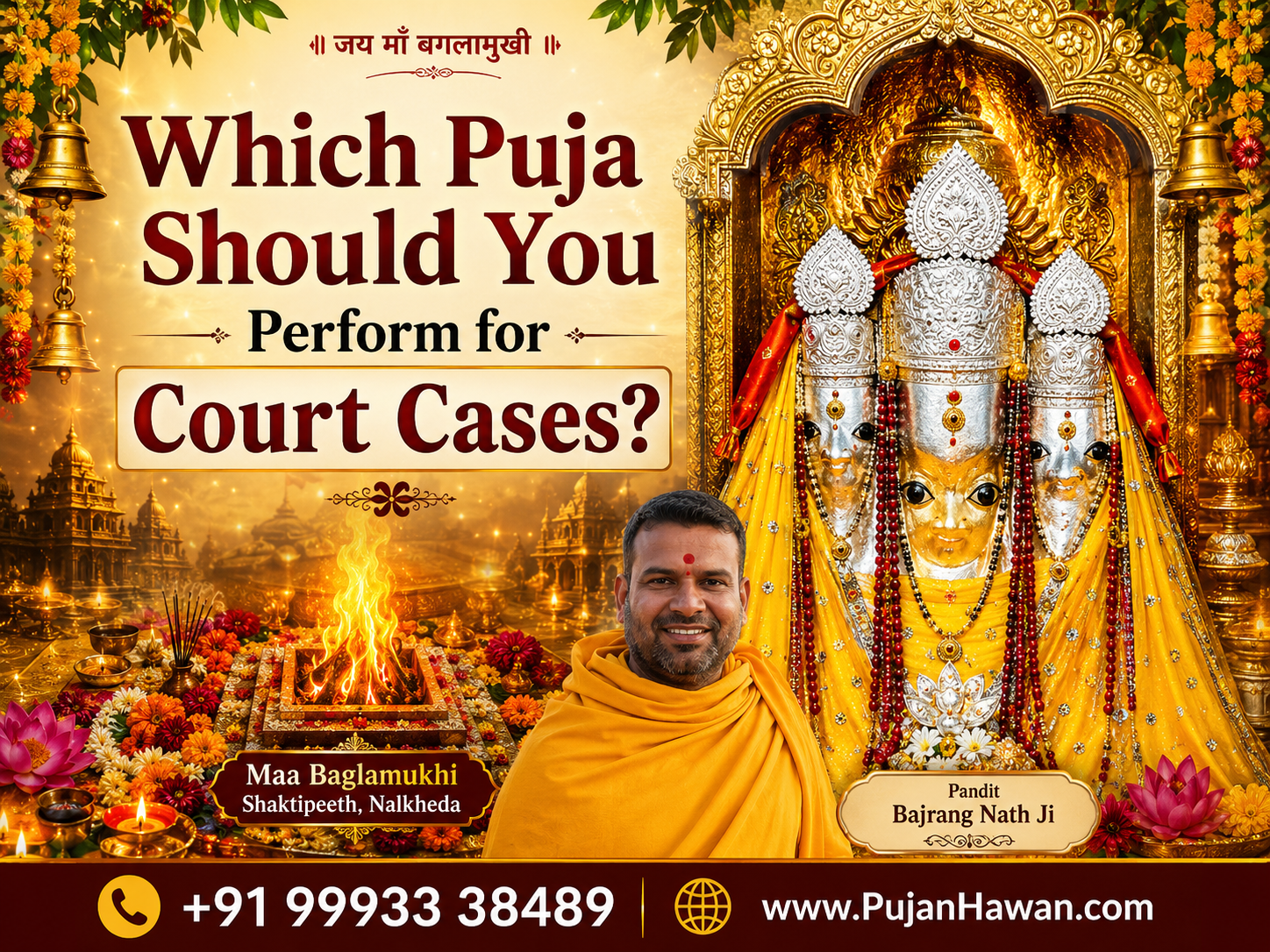
If you're searching for a puja for winning a property dispute case in Madhya Pradesh, Baglamukhi Puja and Anushthan, performed at the Nalkheda Shaktipeeth in Agar Malwa district, is the traditional Vedic remedy devotees turn to for court cases, including land and property disputes usually alongside, not instead of, active legal representation.
For those seeking traditional spiritual support for property disputes or legal matters, devotees in Madhya Pradesh may perform Maa Baglamukhi Puja or Vivad Vijay Puja.
This guide explains why property cases drag on in MP, what the puja involves, how it is performed, and what to realistically expect.
Why Property Dispute Cases Take So Long in Madhya Pradesh
Before looking at remedies, it helps to understand the scale of the problem. Property litigation in MP is not slow by accident the system itself is overloaded.
|
Factor |
Data Point |
|
Pending cases in MP courts |
Around 24 lakh cases pending, one of the highest backlogs among Indian states |
|
Average case disposal time in MP |
Roughly 9.5 years for a typical case to resolve |
|
MP court disposal rate (2024) |
Only about 12%, partly due to a 15% vacancy rate among judges |
|
Realistic timeline for a contested property suit in MP |
5–10 years at the District Court, plus 3–5 years if appealed |
|
Total pending cases, District Courts of India |
Approximately 3.6 crore as of 2024 (National Judicial Data Grid) |
Property disputes are particularly prone to delay because they usually involve fragmented land records, multiple heirs, boundary disagreements, or disputed sale deeds each of which can trigger fresh hearings, adjournments, or counter-suits. This is exactly the kind of prolonged, stuck situation where families in MP, from Indore and Bhopal to Ujjain, Gwalior, and Jabalpur, turn to Vedic remedies as emotional and spiritual support while their advocate handles the legal side.
What Is Baglamukhi Puja for Property Disputes?
Baglamukhi is one of the ten Mahavidyas (wisdom goddesses) in Hindu tradition, and she is specifically associated with Stambhan Shakti the power to still or paralyze an opponent's negative intentions, false claims, and obstruction tactics. This is why she is the deity devotees approach for court matters, not general prosperity.
For a property dispute specifically, the puja is built around three elements:
-
Sankalp (intention-setting): Your name, gotra, and the specific facts of your dispute (which property, which court, which opposing party) are recorded and spoken during the ritual, so the puja is directed at your case, not a generic prayer.
-
Mantra Anushthan: A structured, multi-day recitation of the Baglamukhi Mantra performed under strict traditional discipline.
-
Hawan (fire ritual): Performed with yellow samagri and cow ghee, considered the culminating act that seals the Sankalp.
Why Nalkheda Specifically?
Not every Baglamukhi ritual is performed at the same place, and location matters in this tradition. Nalkheda, on the banks of the Lakhundar River in Agar Malwa district, is one of only three sites in the world where Baglamukhi is worshipped, alongside Datia (MP) and one site in Nepal. According to temple tradition recorded by the Agar Malwa district administration, the shrine's origin is linked to the Mahabharata era, when the Pandavas are said to have worshipped here before reclaiming their kingdom which is part of why the temple has historically been associated with legal victory and overcoming powerful opposition.
The idol at Nalkheda is considered Swayambhu (self-manifested rather than ritually installed), which is one reason devotees travel here specifically for court and property matters rather than performing the puja at a home temple.
Puja Vidhi: Step-by-Step Process
|
Step |
What Happens |
|
1. Consultation |
You share your property dispute details, court stage, and horoscope (if available) free of charge |
|
2. Diagnosis & Muhurat |
Pandit Ji identifies the right Anushthan and fixes an auspicious date and time based on your name and gotra |
|
3. Sankalp |
Your name, gotra, and case details are formally recorded at the start of the ritual |
|
4. Anushthan |
Multi-day mantra recitation performed under traditional discipline at Nalkheda |
|
5. Hawan |
Fire ritual performed with yellow samagri and cow ghee to complete the Anushthan |
|
6. Prasad & Recording |
A recording of the ritual and prasad guidance is shared with you, even if you attended remotely |
Can This Be Done If You Live Outside Madhya Pradesh or Abroad?
Yes. This is one of the most common questions from NRI families and devotees outside MP. You do not need to be physically present at Nalkheda. The Sankalp your name and gotra spoken at the exact moment of the ritual can be taken live over video call, with WhatsApp updates and a recording shared afterward. Devotees from Delhi, Mumbai, Jaipur, and overseas have used this route for property and court matters specifically because travel isn't always possible mid-litigation.
A Devotee's Experience
One example often cited by families dealing with long-running property litigation: a Delhi-based business owner was entangled in a property dispute for four years. After a Sawa Lakh Maha Anusthan performed at Nalkheda, the court decision came in his favor within months. Experiences like this are shared as testimonials, not guarantees every case has its own legal facts, and outcomes depend on the merits of the case and the court process itself.
Important: What This Puja Is and Isn't
To be clear and set correct expectations:
-
This is a traditional spiritual practice, rooted in Vedic and Tantric belief, used by devotees for mental strength, clarity, and removal of perceived obstacles during a stressful legal battle.
-
It is not a replacement for legal representation. You still need a competent advocate, proper documentation, and active follow-up in court.
-
No ritual can alter documented facts, land records, or the legal merits of a case.
-
Many devotees use it alongside their legal strategy, viewing it as emotional and spiritual support during a difficult, drawn-out process.
FAQs About Puja for Winning a Property Dispute Case in Madhya Pradesh
Which puja is best for a property dispute case?
Baglamukhi Anushthan is the traditional choice for property and court disputes, since Baglamukhi is specifically associated with neutralizing opposition and false claims (Stambhan Shakti). The exact Anushthan recommended depends on how long the case has been pending and its current stage best confirmed in a short consultation.
How long does the puja take, and when do results show?
The Anushthan itself is performed over a structured number of days at Nalkheda. Devotees report noticing shifts reduced stress, unexpected movement in the case, or a change in the opposing party's behavior over weeks to months, though legal timelines are ultimately controlled by the court, not the ritual.
Do I need to travel to Nalkheda for the puja to work?
No. The Sankalp can be taken live via video call from anywhere in India or abroad, with your name and gotra spoken at the exact time of the ritual. In-person attendance is welcome but not required.
Is my property dispute information kept confidential?
Yes. Case details, family names, and gotra information shared during consultation and Sankalp are kept strictly private.
What documents or details do I need to share before the puja?
Typically your full name, gotra (if known), a brief description of the dispute, and the current stage of the court case. Legal documents themselves are not required for the ritual those stay with your advocate.
Summary
Property disputes in Madhya Pradesh often stretch across years due to genuine court backlogs, not just bad luck. For families and devotees dealing with this stress, Baglamukhi Puja at Nalkheda Shaktipeeth performed with a personal Sankalp in your name and gotra is the traditional Vedic remedy sought for legal and property matters, available both in person and via live video call for those outside MP or abroad. It works best as a spiritual support alongside your legal process, not a substitute for it.
Ready to take the next step? Book a free consultation with Pandit Bajrang Nath Ji or read more about the Baglamukhi Anushthan for Court Case Victory. You can also WhatsApp directly to share your case details and get guidance on the right ritual and timing for your situation.
Recent Posts